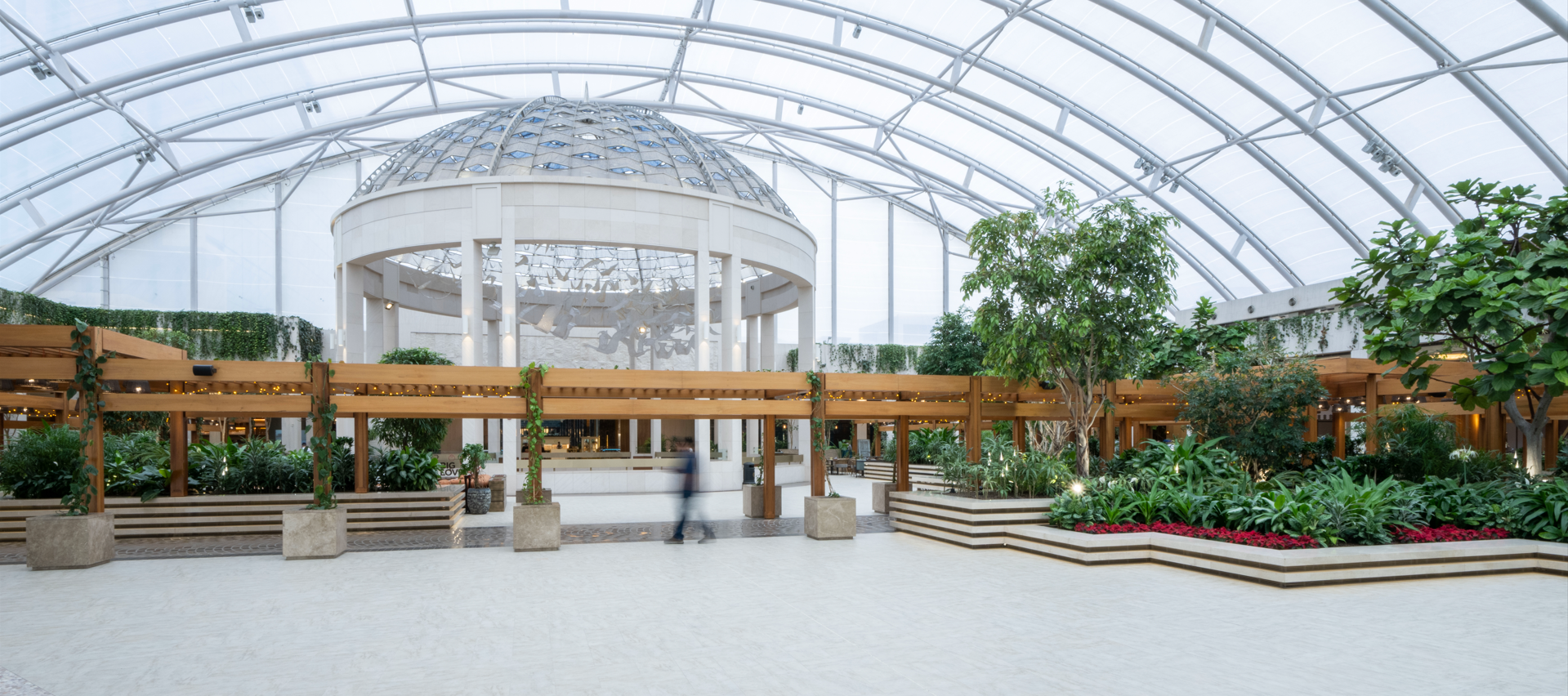
We adopt a lifecycle-driven approach, integrating resilience strategies from the earliest design stages, through construction, and into long-term operations. This ensures our sites are equipped to adapt, perform, and thrive over time.By prioritizing environmental resilience within our projects, we safeguard assets' values and equally address today's environmental realities while creating the inclusive communities of tomorrow within the rapidly growing urban ecosystem of our region.
Responsible Land Selection and Acquisition
Our investment strategy emphasizes selecting locations that support passive design, resource-efficient infrastructure, and climate-responsive technologies. This approach is shaped by the region's environmental challenges, such as extreme heat, water scarcity, and evolving ecological conditions, with the goal of delivering long-term value to stakeholders.In every development, we also prioritize cultural preservation and social cohesion, ensuring that projects respect and reflect the identity of local communities. The land selection process is rooted in key principles including urban fabric cohesion, revitalization of infill and brownfield sites, compact and efficient land use, integration of heritage and cultural context, and proximity-based development.More information on page 28 of the Sustainability Report.
Energy Efficiency
Our commitment firmly extends to net-zero readiness, with robust infrastructure purposefully designed for future renewables and continuous, real-time performance monitoring. In both construction and operations, rigorous commissioning, insulation integrity, and smart metering guarantee designed efficiencies translate into powerful, tangible results.We adopt energy efficiency strategies to minimize energy waste while maximizing occupant comfort and addressing regional climatic temperament. This includes incorporating passive design principles to harness natural systems and smart building controls to cut cooling loads. We integrate climate-smart architecture, such as bioclimatic facades.More information on page 38 in the Sustainability Report.
Water Stewardship
We address Kuwait's water scarcity by implementing a comprehensive water stewardship strategy that evaluates water accessibility, availability, and quality. Despite the region's high-water stress classification, national infrastructure ensures reliable supply for operations, meeting international standards. We use both distilled water from the Ministry of Electricity and Water and treated water from the Ministry of Public Works for non-potable uses. To reduce reliance on desalinated sources, we recycles water on-site through systems like Reverse Osmosis (RO), capturing streams such as AC condensate and cooling tower blowdown for reuse in landscaping and cooling. These practices align with ISO 14001:2015 and LEED certification standards, supporting circular water management and sustainable operations.More information on page 43 in the Sustainability Report.
-91546407.jpg)
Sustainable Land Use and Biodiversity
Every design decision carries long-term ecological and socioeconomic consequences. In a region defined by its arid landscapes and fragile ecosystems, we approaches land use and biodiversity not as compliance obligations, but as foundational pillars of responsible and resilient development.Sustainable land use at Mabanee begins with recognizing the unique regional vulnerabilities that require that we rigorously assess microclimates, soil stability, and flood risks before breaking ground.More information on page 32 of the Sustainability Report.
Circular Strategies Growth
We champion the transition to a circular economy by prioritizing sustainable, locally sourced, and reusable materials across all project phases. In design, the focus is on low-carbon, disassembling components and flexible layouts to extend building life and reduce waste. During construction, resource efficiency is achieved through local sourcing and modular methods that minimize emissions and material waste. Healthy, non-toxic materials are used in operational preparation, while waste management protocols span from design to occupancy, emphasizing reduction, reuse, and recycling. We recycle paper, cardboard, wood, plastic, metal, and e-waste through certified handlers, ensuring significant diversion from landfills.More information on page 417 in the Sustainability Report.
Environmental User Comfort
We believe that the success of any built environment is ultimately measured by the quality of experience it delivers to its occupants. In our projects, we take a holistic approach to Environmental User Comfort, ensuring that our developments not only meet high environmental performance standards but also foster well-being, productivity, and satisfaction for all users, tenants, visitors, and workers. We aim to align with global health-focused certification systems such as WELL and LEED. More information on page 52 in the Sustainability Report.
Resilience & Emergency Preparedness
We integrate comprehensive resilience and emergency preparedness strategies throughout all project phases, aligning with global standards like LEED for Communities and the WELL Community Standard. This approach is built on three core principles: Emergency Preparedness, ensuring immediate safety during crises such as sandstorms or heat-related events, Site Resilience, focusing on long-term infrastructure durability against environmental shocks, and Site Responsiveness, which emphasizes climate-adaptive design tailored to local conditions during early planning stages.More information on page 54 in the Sustainability Report.
Climate Change and Decarbonization
Our approach to climate change goes beyond mere compliance, it is about creating climate-resilient, carbon-smart spaces that deliver enduring value to our investors, communities, and the planet.More information on page 56 in the Sustainability Report.